
When it comes to homework time, you want to support your child without being a tiger mom.
You might wonder how much guidance is helpful and start to feel the pressure because you want your child to start developing good study habits and not fall behind.
But the reassuring part is this: building strong study habits for primary school children does not require strict control or constant correction. Small, thoughtful routines can gently guide your child towards feeling more capable, confident, and ready to learn.
Why are good study habits important?
Good study habits shape more than just academic results. They influence how a child approaches challenges, manages time, and builds confidence in their own abilities.
At primary school age, children are forming their relationship with learning. When study habits feel manageable, they are more likely to stay curious and motivated. When it feels overwhelming, they start to resist or depend too heavily on parents.
This is why the goal is not perfection. It is helping your child feel steady and supported as they learn.
When should I teach study habits?

The truth is, habits start forming earlier than we think. Even simple routines in lower primary years can set the tone for the rest of their schooling journey.
That said, ages 7 to 12 are a sweet spot. Children are old enough to take ownership, yet still open to guidance. This is where gentle structure makes a big difference.
You are not late if you are starting now. Small shifts today can still reshape how your child approaches learning.
What are good study habits for Primary School children?
Before diving into specific techniques, it helps to reframe what “good” looks like. Effective study habits are not about long hours or constant revision.
They are about consistency, focus, and emotional ease.
Here are practical habits you can introduce without turning into a tiger mom.
1. Create a simple, predictable routine
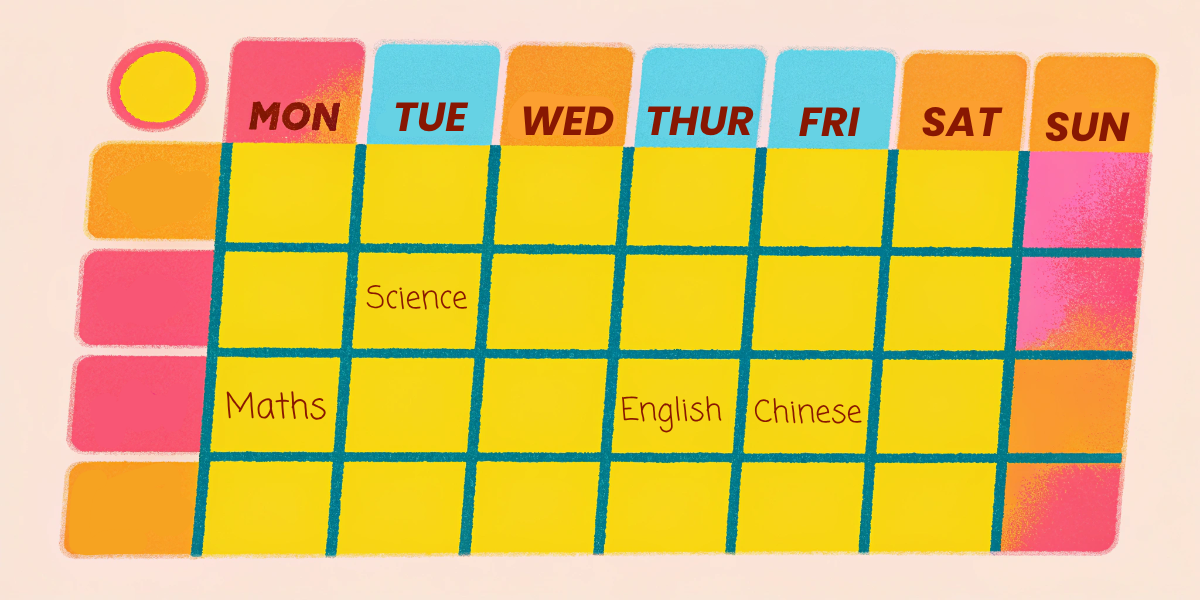
Children thrive when they know what to expect. A fixed study window each day helps reduce resistance because it becomes part of the rhythm.
It does not need to be long. Even 30 to 45 minutes of focused time can be enough for primary school children. Keep it consistent, but flexible when needed. Life happens, and that is okay.
2. Break work into small, manageable chunks

Big tasks can feel intimidating. When a worksheet or revision topic looks overwhelming, children tend to avoid it.
Teach your child to break work into smaller parts. For example, complete five questions, then take a short pause. This builds momentum and helps them feel a sense of progress.
3. Encourage active learning instead of passive reading

Reading notes over and over is not always effective. Children learn better when they engage with the material.
You can encourage them to explain what they have learnt in their own words. They can also teach you, draw mind maps, or create simple quizzes. These are effective study habits that strengthen understanding rather than memorisation alone.
4. Build a distraction-light study space

Not every home has a perfect study room, and that is completely fine. What matters is having a consistent spot that signals “it is time to focus.”
Try to keep devices, toys, and background noise to a minimum during study time. A small, dedicated corner can go a long way in helping your child settle into the task.
5. Use short breaks to reset
All work and no play makes Jack a dull boy. Children have shorter attention spans, especially after a full day at school. Expecting long periods of concentration often backfires.
Instead, introduce short breaks between tasks. A quick stretch, a drink of water, or a few minutes of movement can help reset their focus. This makes study time feel less draining and more manageable.
6. Let your child take ownership

It is tempting to hover, especially when you want them to do well. But constant supervision can create dependency.
Start involving your child in planning their study time. Ask what they want to tackle first or how they want to approach a subject. This builds independence and confidence, which are key outcomes of good study habits.
7. Focus on effort, not just results

Children are very perceptive. When they feel that results matter more than effort, they may become anxious or avoid trying.
Acknowledge their effort, persistence, and improvement. Even small wins deserve recognition. This encourages a healthy mindset towards learning, which is far more valuable in the long run.
8. Keep communication open and calm
Some days will be harder than others. Your child may feel tired, frustrated, or distracted.
Instead of jumping straight into correction, pause and listen. Understanding what is going on helps you respond with patience rather than pressure. This keeps the learning environment safe and supportive.